Bamboo fly rods conjure images of tranquil rivers, skilled hands, and a tradition that spans centuries. But beyond their storied history and visual elegance lies a fascinating realm of science—one that explains why these rods have stood the test of time. What makes bamboo, a grass rather than a wood, so uniquely suited for crafting fly rods that last generations? How do its microscopic structures translate into resilience under repeated strain, and how does it compare to modern rod materials like graphite and fiberglass? Let’s journey into the science behind the durability of bamboo fly rods, exploring their molecular secrets, mechanical strengths, and the blend of nature and craftsmanship that make them a lasting favorite among anglers.
The Unique Structure of Bamboo: Nature’s Composite Material
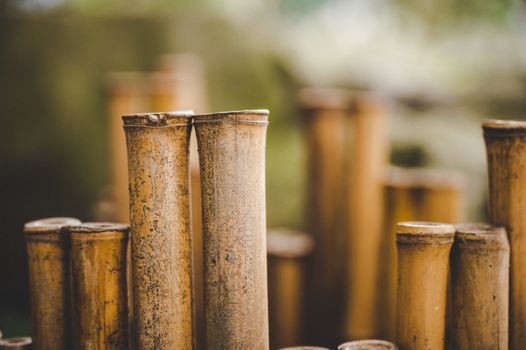
At first glance, bamboo might seem like an unlikely candidate for a high-performance fishing rod. Yet, bamboo is not just any plant—it is an engineering marvel. The species most commonly used for fly rods, Tonkin cane (Pseudosasa amabilis), grows primarily in the Sui River valley of China. Its cellular structure is what sets it apart.
Bamboo’s strength comes from its composition of parallel cellulose fibers embedded in a matrix of lignin and hemicellulose. These fibers run the length of the culm (the bamboo stalk), giving it remarkable tensile strength—some studies estimate between 140-230 MPa, which is comparable to mild steel. The natural resinous lignin acts as a glue, providing compressive strength and flexibility.
Each bamboo culm is divided into nodes and internodes. The internodes are prized for rod making, as they consist of dense, straight fibers with a high ratio of strength to weight. When split and planed into strips for rod building, these fibers retain their alignment, ensuring that the finished rod can flex and return to shape without breaking or deforming.
One fascinating fact: Bamboo’s outer “power fibers” are denser and harder than those at the core, creating a natural gradient of strength. Proper rod making utilizes these power fibers on the outside, where stress is greatest during casting. This optimization is one reason why bamboo rods can endure thousands of casting cycles.
Heat Treating and Tonkin Cane: Enhancing Durability
The process of turning raw bamboo into a fly rod involves careful selection and transformation, with heat treating being a pivotal step. Heat treating removes excess moisture and caramelizes the sugars in the bamboo, which not only deepens color but also stabilizes the material.
By reducing the moisture content from approximately 10% in fresh cane to around 6-8%, heat treating limits the swelling and shrinking that would otherwise occur with humidity changes. This stabilization is critical for durability: rods that retain too much moisture are prone to fungus, warping, and failure under stress.
Scientific studies have shown that heat-treated bamboo exhibits an increase in Young’s modulus—a measure of stiffness—by up to 20%. In practical terms, this means the rod resists bending and recovers more efficiently after flexing, translating to both a better casting experience and longer lifespan.
Craftsmen also carefully select and align the power fibers during rod construction, maximizing the distribution of stress and minimizing weak points. This combination of biological strength and human engineering is at the heart of bamboo rod durability.
Bamboo Versus Modern Materials: A Durability Comparison
In the realm of fly fishing, rods are now commonly constructed from graphite or fiberglass. How does bamboo stack up scientifically against these modern materials in terms of durability? Let’s break down the comparison:
| Property | Bamboo | Graphite | Fiberglass |
|---|---|---|---|
| Tensile Strength (MPa) | 140-230 | 340-380 | 200-300 |
| Flexural Modulus (GPa) | 10-15 | 30-40 | 10-18 |
| Impact Resistance | High | Low to Medium | High |
| Fatigue Resistance | Excellent | Good | Excellent |
| Longevity (years) | 50-100+ | 20-40 | 30-50 |
| Environmental Tolerance | Moderate (requires care) | High | High |
While graphite boasts higher tensile strength and stiffness, it is brittle, making it susceptible to breakage from knocks or sudden loads. Fiberglass is more forgiving and impact-resistant, but lacks the unique blend of stiffness and flex that bamboo provides. Bamboo’s natural fiber structure allows it to absorb and dissipate energy, enhancing both impact resistance and fatigue life—meaning it can undergo repeated flexing without accumulating damage.
Another remarkable fact: Well-maintained bamboo rods from the early 1900s are still fished today, attesting to their remarkable longevity. In contrast, graphite rods often suffer from “micro-cracking” over time, which can eventually lead to sudden failure.
The Role of Craftsmanship in Enhancing Bamboo’s Durability
The journey from bamboo grove to riverbank is one of meticulous craft. Even with bamboo’s natural advantages, the way a rod is built profoundly influences its durability. Each rod is typically composed of six to eight tapered strips, painstakingly split, planed, and glued together. This multi-strip construction distributes stress evenly along the rod, minimizing weak points.
The choice of adhesives is crucial. Modern rod makers use waterproof, high-strength epoxies or resorcinol glues, which are vastly superior to the hide glues used a century ago. These adhesives not only bond the strips but also fill microscopic gaps, further enhancing structural integrity.
Varnishing or sealing the rod is another essential step. A high-quality varnish protects the bamboo from moisture, UV light, and abrasion. Some makers even add multiple coats, sanding between each, to achieve both aesthetic beauty and robust protection.
Assembly of ferrules (the metal joints connecting rod sections) and guides is done with meticulous care, as poorly fitted hardware can create stress concentrations. Modern ferrule designs and advanced materials have minimized these issues, ensuring that the rod maintains its strength at potential failure points.
A single bamboo rod may require over 60 hours of work—an investment that pays dividends in performance and lifespan.
Stress, Flex, and Fatigue: How Bamboo Handles Repeated Use
When casting a fly rod, the blank bends and flexes, storing energy and then releasing it to propel the line. This cyclical loading could easily fatigue or snap a lesser material, but bamboo's cellular architecture is uniquely suited to the task.
Bamboo’s long, continuous fibers run along the rod’s length, providing high resistance to both tension (when the rod is pulled) and compression (when it is pushed). The natural microstructure allows for controlled flex, distributing strain throughout the rod rather than concentrating it in one spot.
Studies on the fatigue life of bamboo rods indicate that they can withstand tens of thousands of flexural cycles without significant loss of strength. This is partly due to bamboo’s viscoelasticity—the ability to deform under load and recover without permanent damage. In contrast, materials like graphite, while strong, are more prone to “catastrophic failure,” meaning they may snap suddenly after accumulating internal damage.
One study published in the Journal of Composite Materials (2016) found that bamboo retained over 90% of its strength after 50,000 cycles of flexural loading, a testament to its natural resilience.
Environmental Factors: Caring for a Living Material
While bamboo is exceptionally durable, it remains an organic material, and its longevity is closely tied to environmental care. Moisture, temperature swings, and UV exposure can all impact its structural integrity over decades.
Bamboo rods should be dried thoroughly after use, especially if fished in saltwater or humid environments. Prolonged exposure to moisture can compromise the protective finish and allow fungi or bacteria to attack the cane. UV light can also break down varnish, leading to surface cracks and eventual water ingress.
Unlike graphite or fiberglass, bamboo rods benefit from periodic maintenance—re-varnishing, checking for loose wraps, and storing in a cool, dry place. With proper care, however, these rods can remain fishable for a century or more—a feat few synthetic materials can match.
As a testament to their durability, a survey of rod collectors in 2022 revealed that over 70% of bamboo rods more than 60 years old are still considered structurally sound and fishable, provided they have been properly maintained.
Final Reflections: The Lasting Science of Bamboo Fly Rod Durability
The enduring appeal of bamboo fly rods is no accident. Their durability is rooted in both biology and the ingenuity of rod makers—leveraging the remarkable tensile strength, fiber alignment, and viscoelastic properties of Tonkin cane, enhanced by modern adhesives and finishes. Compared to graphite or fiberglass, bamboo offers a unique blend of strength, flexibility, and character, with properly cared-for rods lasting for generations.
Understanding the science behind bamboo’s durability deepens our appreciation for these rods, not just as fishing tools but as marvels of natural engineering, shaped by human hands. For anglers and collectors alike, a bamboo fly rod is more than a relic—it is a living link to both the past and the cutting edge of material science.